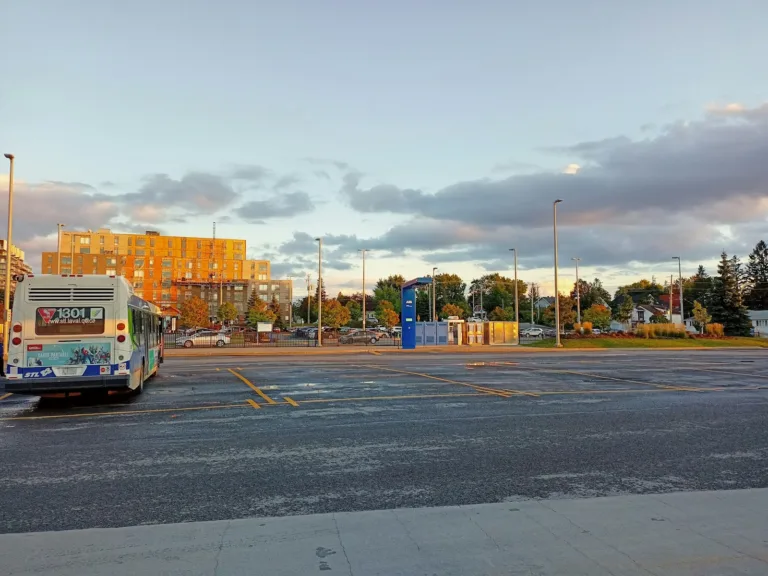
Most walks home in Canada end without any problem, and a few simple habits make them safer still: plan a well-lit, busy route, share your location with someone you trust, keep your attention on your surroundings and know what you will do if something feels wrong. Robbery, the street crime many people worry about most, fell 6% nationally in 2025 to 55 incidents per 100,000 people. If you are ever in immediate danger, call 911.
Data: Statistics Canada, police-reported crime statistics for 2025 (released 22 July 2026). Rates are per 100,000 population for whole census metropolitan areas. Updated 5 October 2026. The tips below are general guidance, not a guarantee of safety.
Key facts
- Police in Canada recorded 22,942 robberies in 2025, a rate of 55 per 100,000 people, down 6% from 2024 (Statistics Canada, released 22 July 2026).
- Canada’s Crime Severity Index was 75.0 in 2025, down 5%.
- The Toronto census metropolitan area’s robbery rate fell from 73.0 to 60.3 per 100,000 in 2025, a drop of about 17% (our calculation from Statistics Canada data).
- Winnipeg’s robbery rate of 296.6 per 100,000 in 2025 was about 5.4 times the national rate of 55.1 (our calculation from Statistics Canada data).
- Police-reported criminal harassment rose 6% in 2025 to 35,618 incidents, or 86 per 100,000 people.
- Only about 29% of victimizations in Canada were reported to police in 2019.
How risky is walking home at night in Canada?
The risk of walking home at night in Canada is low for most people: police recorded 22,942 robberies across Canada in 2025, a rate of 55 per 100,000 people, down 6% from 2024. The Crime Severity Index (CSI) is Statistics Canada’s measure of the volume and seriousness of police-reported crime; nationally it fell 5% to 75.0 in 2025.
Rates do differ between census metropolitan areas (CMAs), the metro regions made up of a core city and its suburbs, and incidents tend to concentrate in busy downtown, nightlife and transit areas rather than quiet residential streets. Here is how robbery rates compared in some large metros in 2025:
| Metro area (CMA) | Robberies 2025 | Rate per 100,000 (2025) | Rate per 100,000 (2024) |
|---|---|---|---|
| Canada | 22,930 | 55.1 | 58.6 |
| Ottawa (Ont. part) | 620 | 47.0 | 43.0 |
| Halifax | 271 | 49.7 | 54.9 |
| Vancouver | 1,703 | 55.2 | 52.6 |
| Toronto | 4,235 | 60.3 | 73.0 |
| Calgary | 1,111 | 60.5 | 72.0 |
| Montréal | 3,163 | 68.1 | 64.3 |
| Edmonton | 1,494 | 88.0 | 82.6 |
| Winnipeg | 2,746 | 296.6 | 320.7 |
Note: the national robbery count in Statistics Canada’s summary (22,942) and in its detailed violation table (22,930) differ slightly; we show the table figure here so the rows are consistent. Remember that police data only covers reported incidents. In 2019, only about 29% of victimizations were reported to police. For all violent offences by metro area, see violent crime in Canada by city.
How should I plan my route home?
The safest route home at night in Canada is a busy, well-lit one that you know before you leave:
- Choose busy, well-lit streets over shortcuts through parks, alleys, parking lots or unlit paths, even if it adds a few minutes.
- Know the route before you leave. Looking at a map on a dark corner signals that you are unsure and takes your attention away from the street.
- Note safe places along the way: 24-hour shops, gas stations, hotel lobbies, restaurants and transit stations with staff.
- Avoid walking alone when you can. Leave with friends, walk part of the way together, or use a taxi or ride-hail for the last stretch on late nights.
- Dress for the weather. In a Canadian winter, ice, snowbanks and cold are real hazards; wear proper footwear and keep your phone charged, as batteries drain faster in the cold.
Should I share my location with someone?
Yes, sharing your live location with someone you trust is one of the simplest safety steps for walking home at night. Most smartphones let you share your live location with chosen contacts for a set period, and many messaging apps offer the same feature.
- Tell a friend or family member when you are leaving and roughly when you expect to arrive.
- Share your live location until you are home, then turn it off.
- Send a quick “home safe” message so they know they can stop watching.
- Agree in advance what they should do if they cannot reach you, such as calling you, then calling 911 if there is a genuine concern.
- Learn how your phone’s built-in emergency SOS feature works before you need it.
Our guide to safety apps for women explains which features help on a walk home and how to keep location sharing private.
How do I stay alert while walking?
To stay alert while walking home at night, keep your eyes and ears on your surroundings rather than on your phone:
- Keep at least one ear free if you listen to music or calls, and keep the volume low.
- Keep your phone out of sight when not using it, especially near transit entrances.
- Walk confidently, facing oncoming traffic on roads without sidewalks so a car cannot pull up behind you unnoticed.
- Have your keys ready as you approach home so you are not searching at the door.
- Trust your instincts. If a person or place makes you uneasy, cross the street, change direction or go into a busy shop. You do not need a reason to be cautious.
What about taking transit or a ride home?
Transit, taxis and ride-hail are generally good options for getting home late at night in Canada, and a few habits help:
- Wait in well-lit, staffed or camera-covered areas of stations and platforms.
- On buses, sit near the driver; on trains, choose a carriage with other passengers.
- Check last-departure times before you go out so you are not stranded.
- For taxis or ride-hail, check the licence plate, vehicle and driver name match the booking before you get in, and sit in the back.
- Share your trip details or live location with someone you trust.
See our public transit safety guide for more.
What should I do if I think I am being followed?
If you think you are being followed while walking in Canada, follow these five steps:
- Do not go home. You do not want to lead someone to where you live.
- Head for people and light. Go into an open shop, restaurant, gas station or hotel lobby and tell staff you feel unsafe.
- Cross the street or change direction to check whether the person is really following you.
- Call someone and stay on the line, describing where you are.
- Call 911 if you believe you are in danger. Give your location first, then a description of the person.
If someone demands your phone, bag or wallet, hand it over. Property can be replaced; your safety cannot. Report it to police afterwards. Our guide on how to report a crime in Canada explains the options.
Is it safe to walk home in my city?
Whether it is safe to walk home in your city depends on the specific streets, time of night and your route: in 2025, robbery rates among the large metro areas above ranged from 47.0 per 100,000 in Ottawa to 296.6 in Winnipeg, but no city-wide figure can capture a single street. To get a better picture:
- Check your local police service’s official crime map or open data for the streets you walk; our guide on how to check crime in your neighbourhood lists the main sources.
- Look up your metro area’s figures on our Canada crime map.
- Walk the route once in daylight, noting lighting and open businesses.
- Read our city guides, such as Is Toronto safe? or Is Winnipeg safe?
Walking home tonight?
Safety App puts official crime data on a live map, plans walking routes that avoid high-risk areas and sends one-tap SOS alerts to the people you trust. Now on Google Play for Android; iPhone coming soon.
Walking home at night FAQ
Is robbery common in Canada?
Police reported 22,942 robberies in 2025, a rate of 55 per 100,000 people, down 6% from 2024. Rates vary by metro area and are higher in busy downtown and transit areas.
Should I carry something to defend myself?
Many items sold for self-defence are restricted or prohibited in Canada. Focus on prevention: route planning, staying alert, sharing your location and getting to a safe place quickly.
What is the best thing to do if I feel unsafe?
Move towards people and light, such as an open shop or staffed station, and call someone. If you believe you are in danger, call 911.
Is it safer to take a taxi than to walk late at night?
For long walks through quiet areas late at night, a taxi, ride-hail or transit can be a sensible choice. Check the vehicle and driver match your booking and share your trip.
Is criminal harassment increasing?
Police-reported criminal harassment rose 6% in 2025 to 35,618 incidents, or 86 per 100,000 people. If someone is repeatedly following or contacting you against your wishes, report it to police.