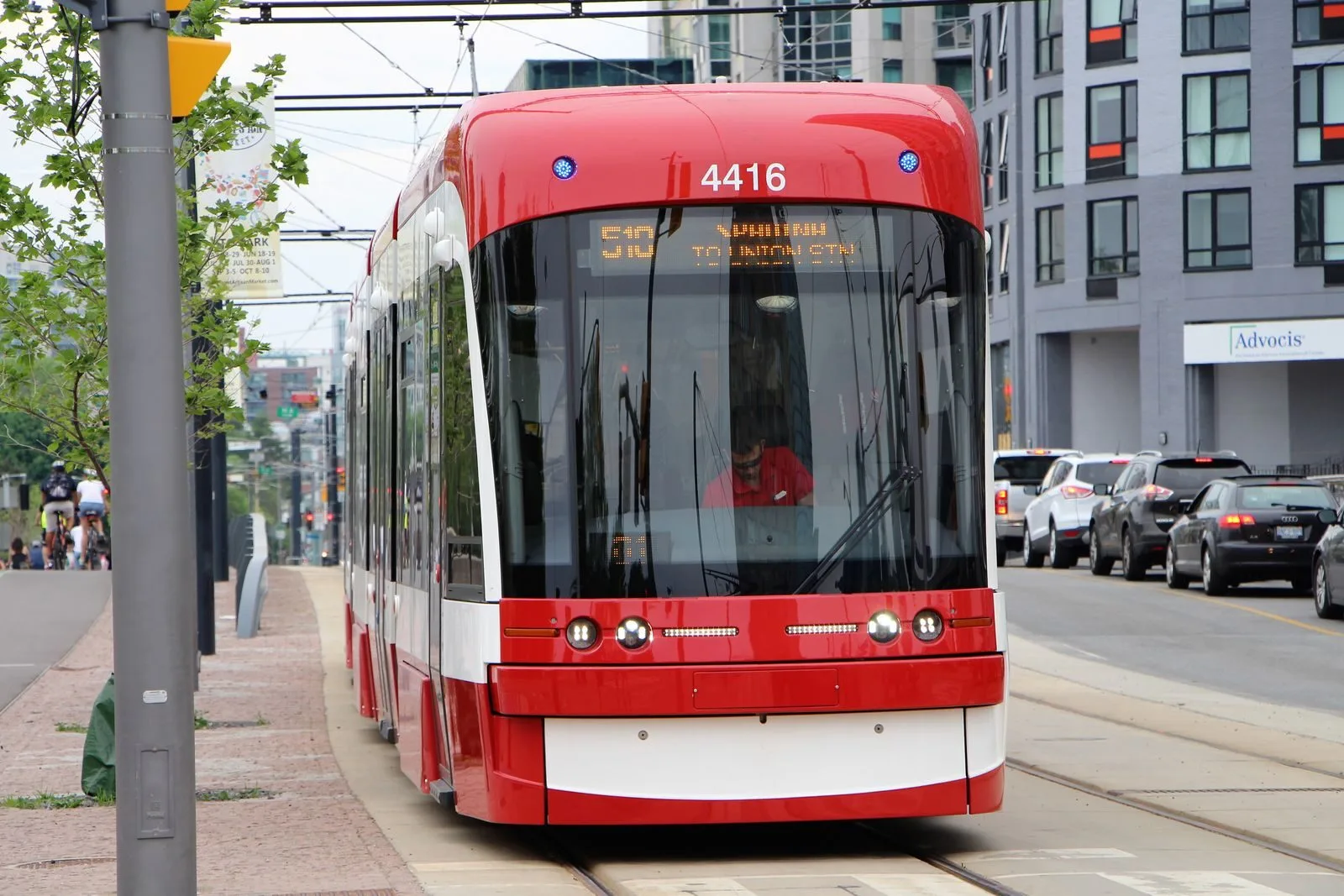
Public transit in Canada is used safely by millions of people every day, and a few habits make it safer: wait in well-lit, staffed areas, sit near the driver or other passengers, keep your phone and bag secure, and know how to get help on board. Crime tends to concentrate wherever large numbers of people gather, including busy transit hubs, so staying aware matters more there. In an emergency, call 911.
Data: Statistics Canada, police-reported crime statistics for 2025 (released 22 July 2026). Statistics Canada does not publish a national transit-specific crime figure in this release, so we do not quote one. Each transit agency publishes its own safety information. Updated 5 October 2026. Tips are general guidance.
Key facts
- Canada’s Crime Severity Index was 75.0 in 2025, down 5% from 2024 (Statistics Canada, released 22 July 2026).
- Police in Canada recorded 22,942 robberies in 2025, a rate of 55 per 100,000 people, down 6%.
- Police-reported criminal harassment rose 6% in 2025 to 86 incidents per 100,000 people.
- Statistics Canada’s 2025 release includes no national transit-specific crime figure; transit agencies publish their own safety information.
- Only about 29% of victimizations in Canada were reported to police in 2019.
Is public transit safe in Canada?
Public transit in Canada is safe for most riders on most trips: there is no national transit crime figure in Statistics Canada’s 2025 release, but Canada’s Crime Severity Index fell 5% to 75.0 in 2025 and robbery fell 6%. The Crime Severity Index (CSI) is Statistics Canada’s measure of the volume and seriousness of police-reported crime. Transit agencies report incidents in different ways, so it is hard to compare systems fairly, and crime in cities tends to cluster in busy areas such as downtown cores and transit hubs, simply because that is where people and property gather.
The aim is not to avoid transit but to ride with the same awareness you would use anywhere busy.
How do I stay safe while waiting for a bus or train?
To stay safe while waiting for a bus or train, wait where you can be seen and know where help is:
- Wait in well-lit areas, close to other people, staff or help points and within view of cameras.
- Stand back from the platform edge and behind any marked line until the train stops.
- Check schedules before you leave so you are not waiting long at a quiet stop, especially late at night. Many agencies have real-time apps or text services.
- Know where help is: look out for emergency intercoms, alarm strips, staffed booths and designated waiting areas on platforms.
- Keep your phone away when trains arrive, as doorways and crowds are where phones are most easily snatched.
Where should I sit on the bus or train?
On a bus or train, sit where the driver, staff or other passengers can see you:
- On buses, sit near the front where the driver can see you.
- On subways and trains, choose a carriage with other passengers, ideally near the operator or staff.
- Sit near the aisle or doors on a quiet vehicle, so you can move if you need to.
- If someone makes you uncomfortable, move seats or carriages, or get off at the next busy stop.
- Some agencies offer request-stop or between-stops programmes at night that let riders get off closer to their destination. Check your local transit agency’s website for what is available.
How do I protect my phone, wallet and bag?
To protect your phone, wallet and bag on transit, keep them zipped, in front of you and away from the doors. Theft is one of the most common types of police-reported crime in Canada, and crowded places give thieves cover. On busy transit, small precautions help:
- Keep your bag zipped and in front of you in crowds; wear backpacks on your front on packed trains.
- Keep your phone in a front pocket or inside your bag, not in a back pocket.
- Avoid using your phone right by the doors, where someone could grab it as they step off.
- Carry only the cards and cash you need, and keep your transit card separate from your main wallet.
- Set up a phone lock screen and remote locate or erase features in advance.
What should I do if I feel unsafe on transit?
If you feel unsafe on transit in Canada, follow these four steps:
- Move away from the person or situation: change seats, carriages or get off at a busy stop.
- Tell the driver, operator or station staff. Use the emergency intercom or alarm on the vehicle or platform if needed.
- Use your agency’s safety reporting options. Many Canadian transit agencies offer a way to report concerns by text or app; find yours on the agency’s official website and save it in your phone.
- Call 911 if you or someone else is in immediate danger. Tell the call-taker the route, vehicle number or station, and direction of travel.
Do not pull an emergency alarm between stations unless your transit agency’s instructions say to; on some systems, stopping a train between stations can delay help. Follow the signs on board.
What if I witness harassment or an incident?
If you witness harassment or an incident on transit, your safety comes first, but you can help without putting yourself at risk:
- Alert the driver, operator or station staff.
- Report it through the agency’s safety reporting options or call 911 if someone is in danger.
- Check in with the person targeted, if it is safe, by asking whether they are okay or would like you to stay with them.
- Note details such as time, route, vehicle number and descriptions to share with staff or police.
Police-reported criminal harassment rose 6% nationally in 2025, to 86 incidents per 100,000 people. Reporting helps agencies and police see where problems are happening.
How do I travel safely late at night?
To travel safely on transit late at night, plan your last connection and share your trip with someone you trust:
- Plan your trip, including your last connection, before you go out.
- Share your live location or trip details with someone you trust, and tell them when you are home; our guide to personal safety apps in Canada compares the options.
- Travel with friends where possible, and get off at busier, well-lit stops.
- For the walk from the stop, see our walking home alone at night tips.
- If transit is not running, use a licensed taxi or ride-hail, and check the vehicle and driver match the booking.
How do I check crime around a station or stop?
To check crime around a station or stop, follow these four steps:
- Look at your local police service’s official crime map or open data around the station; see how to check crime in your neighbourhood for the main sources.
- Check your metro area on our Canada crime map.
- Remember that busy stations record more incidents because more people pass through; look at incident types, not just totals.
- Check your transit agency’s website for its own safety information and reporting options.
Riding transit tonight?
Safety App puts official crime data on a live map, plans walking routes that avoid high-risk areas and sends one-tap SOS alerts to the people you trust. Now on Google Play for Android; iPhone coming soon.
Public transit safety FAQ
Is it safe to take the subway at night in Canada?
Most late-night trips are uneventful. Wait in well-lit, staffed areas, choose a carriage with other passengers, keep your phone secure and share your trip with someone you trust.
How do I report a problem on transit?
Tell the driver, operator or station staff, or use your transit agency’s official safety reporting options. In an emergency, call 911.
Are there official statistics for crime on Canadian transit?
Statistics Canada’s 2025 release does not include a national transit crime figure. Individual transit agencies and police services may publish their own information.
What is the most common crime on transit?
We do not have transit-specific national data. In general, theft is the most common type of crime in busy public places, so keep valuables secure, especially in crowds and near doors.
Should I intervene if I see harassment?
Only if it is safe. Alerting staff, reporting through official channels and checking in with the person afterwards are safe ways to help.