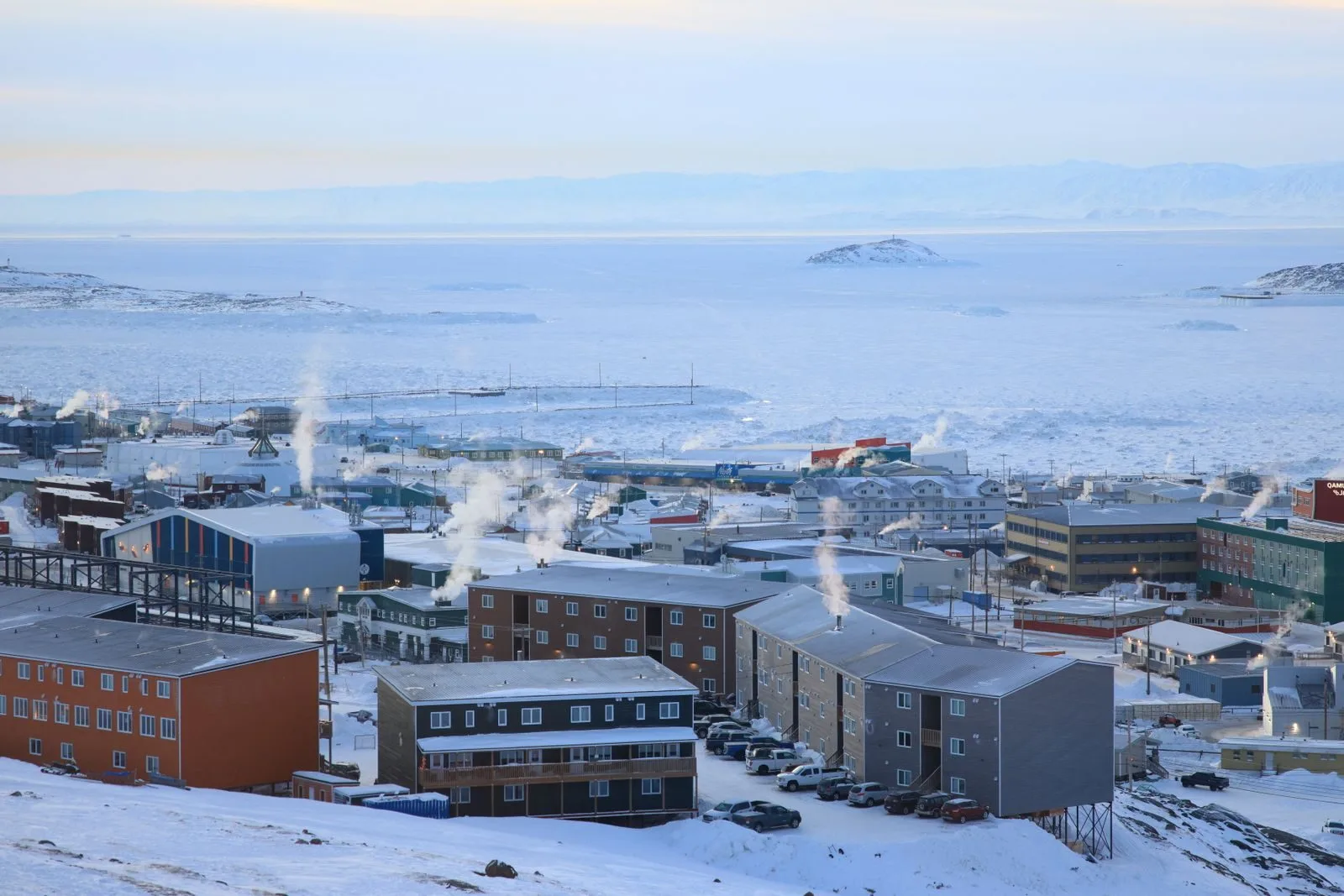
Canada’s three territories have the highest police-reported crime levels in the country: in 2025 the Crime Severity Index was 485.9 in the Northwest Territories, 461.2 in Nunavut and 195.4 in Yukon, against 75.0 for Canada. The CSI fell in Yukon (-6%) and the Northwest Territories (-8%) but rose 10% in Nunavut, one of only two jurisdictions where it increased. Small populations, remoteness and long-standing social and historical factors all shape these figures.
Data: Statistics Canada, police-reported crime statistics for 2025 (released 22 July 2026), Crime Severity Index and incident-based crime tables by province and territory. Comparisons and percentages that are not in the release are our own arithmetic. Updated 5 October 2026.
Key facts
- The Northwest Territories had a Crime Severity Index of 485.9 in 2025, the highest in Canada and down 8% (Statistics Canada, released 22 July 2026).
- Nunavut’s CSI rose 10% to 461.2 in 2025, one of only two jurisdictions in Canada where it increased.
- Yukon’s CSI was 195.4 in 2025, down 6%, the lowest of the three territories.
- Nunavut’s crime rate was 57,617 incidents per 100,000 people in 2025, about ten times the national 5,585 (our calculation from Statistics Canada data).
- The Northwest Territories’ 2025 CSI was about 6.5 times the national 75.0 (our calculation from Statistics Canada data).
- Nunavut’s CSI was 68% higher in 2025 than in 2015.
What are the crime figures for Yukon, NWT and Nunavut?
In 2025 the Crime Severity Index was 485.9 in the Northwest Territories, 461.2 in Nunavut and 195.4 in Yukon, all far above Canada’s 75.0, according to Statistics Canada (released 22 July 2026).
| Jurisdiction | CSI 2025 | CSI change 2024–25 | CSI change 2015–25 | Incidents | Crime rate per 100,000 | Rate change 2024–25 |
|---|---|---|---|---|---|---|
| Yukon | 195.4 | -6% | +7% | 9,286 | 19,234 | -11% |
| Northwest Territories | 485.9 | -8% | +51% | 22,762 | 49,536 | -8% |
| Nunavut | 461.2 | +10% | +68% | 24,101 | 57,617 | +6% |
| Canada | 75.0 | -5% | +7% | 2,326,077 | 5,585 | -2% |
| Saskatchewan (highest province) | 146.6 | -5% | +6% | 151,255 | 11,938 | -5% |
The Crime Severity Index (CSI) is Statistics Canada’s measure of police-reported crime weighted by seriousness, with Canada in 2006 set at 100; see our Crime Severity Index explained guide. The crime rate is the number of Criminal Code incidents (excluding traffic) per 100,000 people, as used in our crime rate in Canada overview.
By our arithmetic, the Northwest Territories’ CSI is about 6.5 times the national level and Nunavut’s about 6.1 times; Yukon’s is about 2.6 times. Measured by the simple crime rate, Nunavut’s 57,617 incidents per 100,000 residents is about ten times the national rate.
Why are crime rates so high in the North?
Crime rates in Canada’s territories ranged from 19,234 (Yukon) to 57,617 (Nunavut) incidents per 100,000 people in 2025, and Statistics Canada’s data record these police-reported incidents without explaining their causes. The figures are real, and they reflect genuine harm to people living in the North, but they need careful reading. Several well-documented features of the territories affect the numbers:
- Very small populations. Rates are expressed per 100,000 people, but each territory has only a fraction of that population. Every single incident has a large effect on the rate, and changes from year to year can look dramatic.
- Remoteness and services. Many communities are small, isolated and reachable only by air for much of the year, with limited access to services such as health care, treatment and housing.
- Policing and reporting. In small communities, police are closely connected with residents, and more minor incidents may come to police attention than in a large city. Offences such as mischief and disturbing the peace count fully in the crime rate.
- Historical context. Many northern communities are predominantly Indigenous, and the lasting effects of colonial policies such as residential schools on social conditions are widely recognised in Canada. These are effects of history and circumstances, not characteristics of people.
None of this makes northern communities “dangerous places” in a simple sense. A high rate tells you that police are dealing with a heavy caseload relative to population; it does not describe the people who live there.
Is crime in the territories getting better or worse?
Crime in the territories moved in different directions in 2025: the Crime Severity Index fell 6% in Yukon and 8% in the Northwest Territories but rose 10% in Nunavut. In detail:
- Yukon: CSI fell 6% and the crime rate fell 11% in 2025. Over ten years the CSI is up 7%, in line with the national change.
- Northwest Territories: CSI fell 8% and the crime rate fell 8% in 2025, but the CSI is 51% higher than in 2015.
- Nunavut: CSI rose 10% and the crime rate rose 6%. Along with New Brunswick, Nunavut was one of only two jurisdictions in Canada where the CSI went up in 2025. Its CSI is 68% higher than in 2015.
Because the populations are small, a single year is a weak guide. A trend over several years is more meaningful than any one change.
Why can one year change so much in the North?
One year can change the North’s crime figures a lot because the totals are small: Yukon recorded 9,286 incidents in 2025, the Northwest Territories 22,762 and Nunavut 24,101, compared with 698,533 in Ontario. With totals this small, shifts in a few types of offence, a change in police staffing, or a handful of serious incidents can move the CSI noticeably. Nunavut’s 10% rise and the Northwest Territories’ 8% fall should both be read with that in mind, as part of longer trends rather than as a verdict on a single year.
How should visitors and newcomers read these numbers?
Visitors and newcomers should read the territories’ 2025 figures — a Crime Severity Index of 195.4 in Yukon, 485.9 in the Northwest Territories and 461.2 in Nunavut — as territory-wide averages that combine the capitals with very small remote communities, where conditions vary a great deal. Many people travel to the territories for work, tourism or to live, and most visits pass without trouble. Some points help put the data in perspective:
- Our data pack does not include figures for individual communities or for Whitehorse, Yellowknife or Iqaluit separately, so we do not rank them.
- Practical safety in the North is often as much about weather, distance and travel planning as about crime: tell someone your plans, carry appropriate gear and check local conditions.
How do the territories compare with the provinces?
All three territories had a higher Crime Severity Index in 2025 than any province: Yukon’s 195.4 compares with 146.6 in Saskatchewan, the highest province. Saskatchewan (146.6) and Manitoba (130.0) have the highest provincial CSI scores, while Ontario (57.2) and Quebec (61.6) have the lowest. Yukon’s CSI is about a third higher than Saskatchewan’s, while the Northwest Territories and Nunavut are more than three times higher (our arithmetic).
For the full provincial picture, see our crime rate by province and territory page and our guide to crime in Saskatchewan and Manitoba.
How do I check crime in a specific northern community?
- Policing in all three territories is provided by the RCMP. Local detachments and the territorial governments publish information and annual reports.
- Look up territorial figures in the Statistics Canada CSI table.
- Use our Canada crime map for national comparison.
- Read the limits: small numbers, reporting differences and the absence of community-level data in most public sources.
Want this on your phone?
Safety App puts official crime data on a live map, plans walking routes that avoid high-risk areas and sends one-tap SOS alerts to the people you trust. Now on Google Play for Android; iPhone coming soon.
Crime in Canada’s territories FAQ
Which territory has the highest crime rate?
Nunavut had the highest crime rate in 2025, at 57,617 incidents per 100,000 people. The Northwest Territories had the highest Crime Severity Index, at 485.9.
Is crime in Yukon lower than in the other territories?
Yes, crime in Yukon is lower: Yukon’s CSI was 195.4 in 2025 and its crime rate 19,234 per 100,000, both well below NWT and Nunavut, though still above every province.
Did crime go up in Nunavut in 2025?
Yes, crime went up in Nunavut in 2025: its CSI rose 10% to 461.2 and its crime rate rose 6%. Nunavut and New Brunswick were the only jurisdictions where the CSI increased.
Why are the territories’ crime numbers so high?
Small populations make rates volatile, and remoteness, limited services, policing patterns and long-standing historical and social factors all play a part. The figures describe police-reported incidents, not the people who live there.
Are there figures for Whitehorse, Yellowknife or Iqaluit?
Not in our verified data set. We only report territory-wide figures for the North.
Related: Crime rate by province and territory · Crime in Saskatchewan and Manitoba · The Crime Severity Index explained · Crime rate in Canada 2025 · Safety tips for tourists. Source: Statistics Canada, The Daily. In an emergency call 911.